
A winter inside the shed: building speed in the details
Since November 28, our 60-foot IMOCA 11th Hour Racing has been living to a different rhythm. No big Atlantic swells or whistling winds, just the steady hum of tools inside the team shed in Lorient. After securing second place in the Transat Café l’OR, the technical team chose a clear path for the winter: no radical redesign, but focused work to make the platform ever more reliable and efficient.
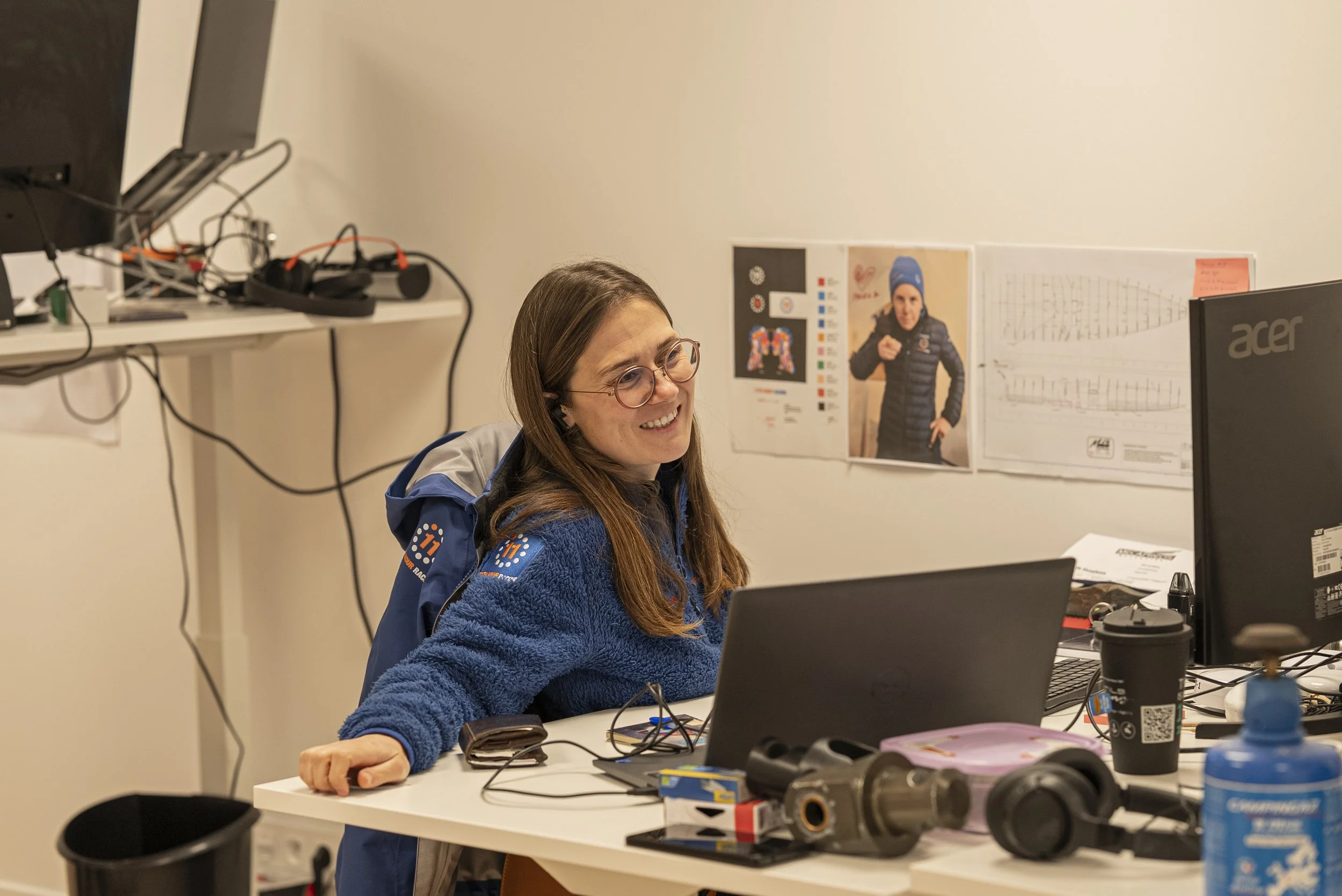
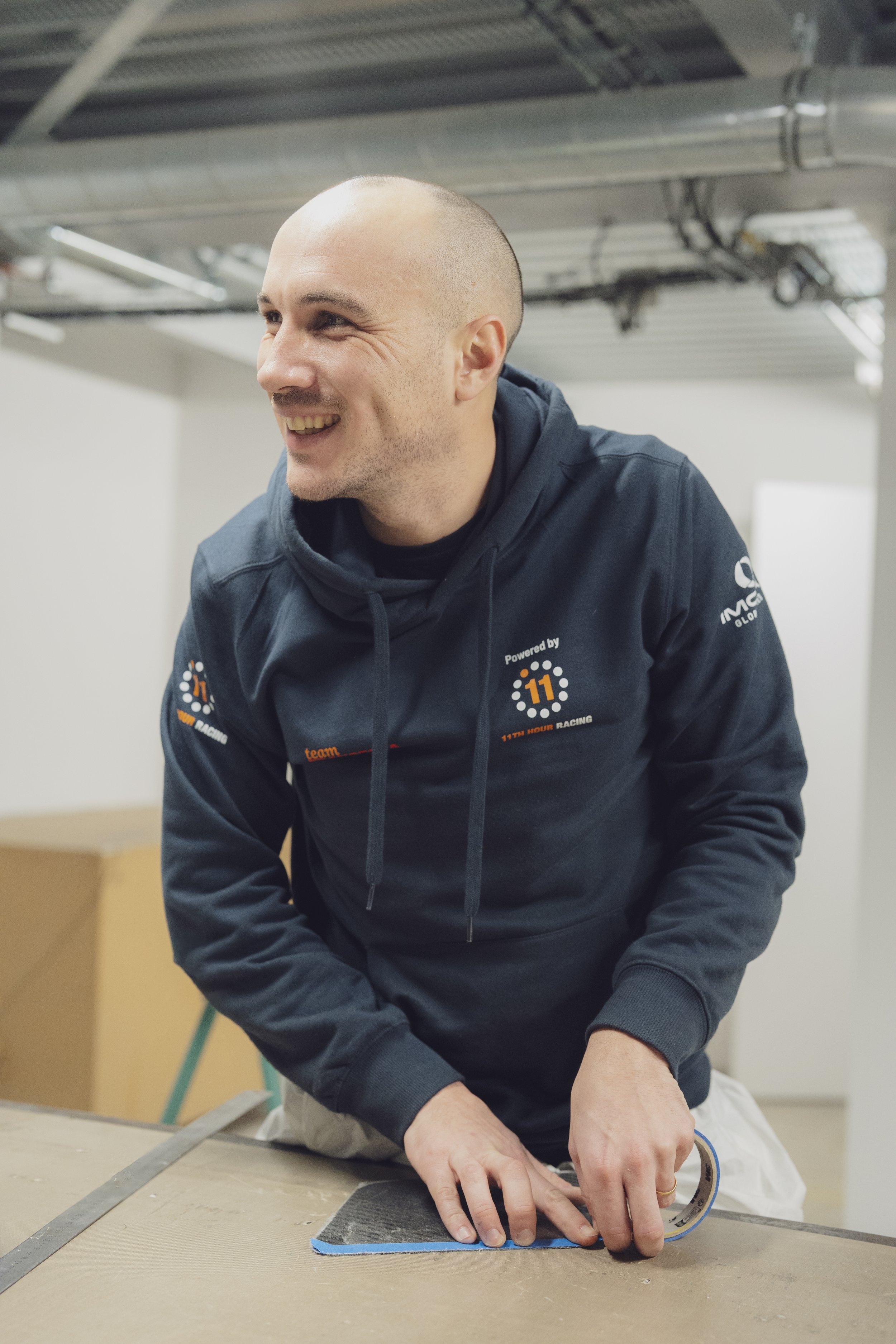
We caught up with Design Office Ingenier Noémie Provost and Antoine Breton, our team’s composites expert, to explain the thinking behind this winter refit.
Maud Helfgott - polaRYSE / 11th Hour Racing
“Our focus this winter has been on a four stage process - check, repair, optimize, save weight,” shared Antoine. “After the two transatlantics in the autumn, we had a few important items to change - mast dump valve, parts of the keel hydraulic system, and other details. But at the same time, we are working on performance. With the big racing season ahead, the boat has to be both reliable and faster.”
It’s this balance between refit and performance that has guided every stage of the project.
Maud Helfgott - polaRYSE / 11th Hour Racing
full strip-down
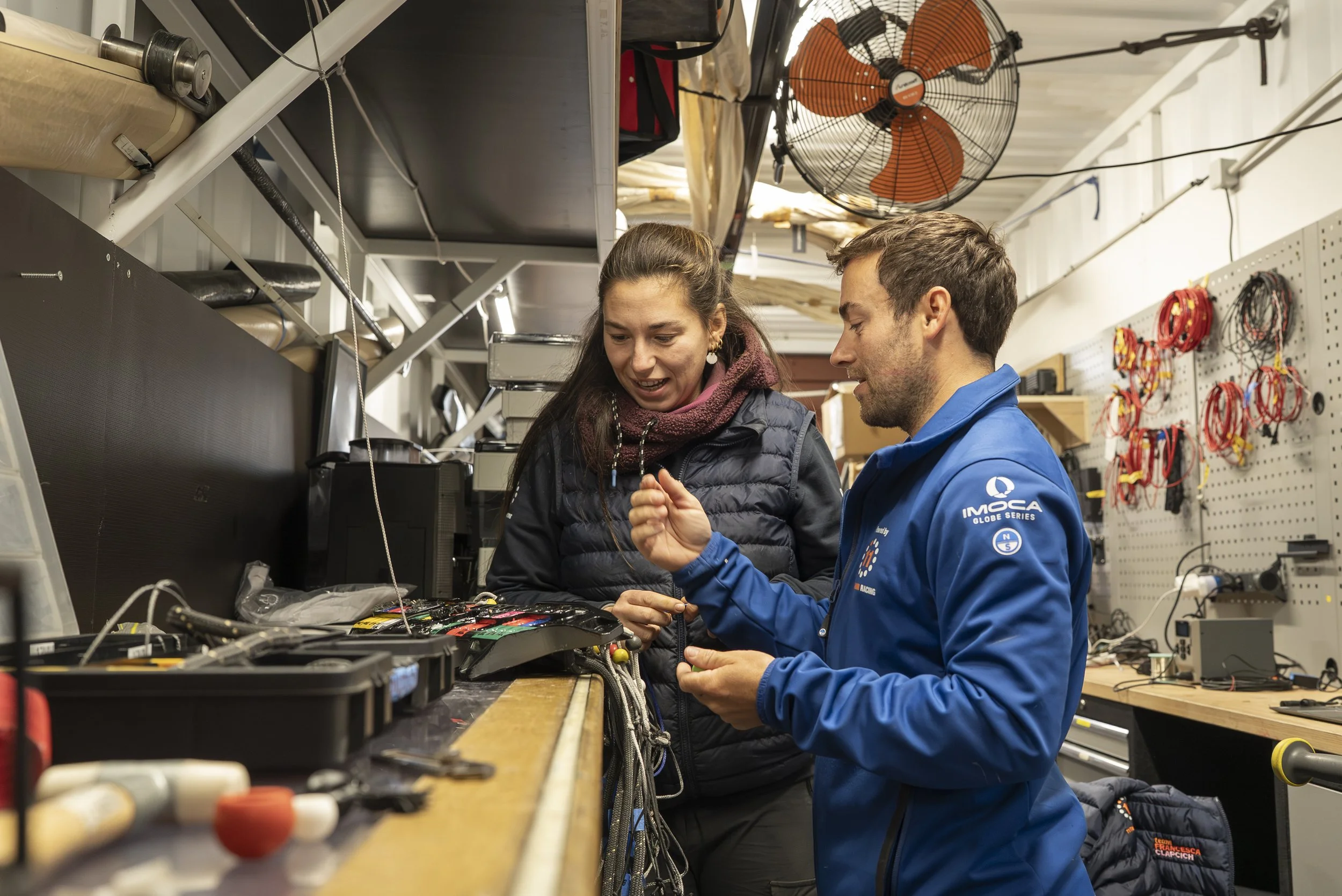
For Antoine, the winter refit began the moment the boat was lifted out of the water. “When we took the boat out, we did a thorough check,” he explains. “We completely dismantled everything inside to inspect it all, see what was broken, and then move on to repairs.”
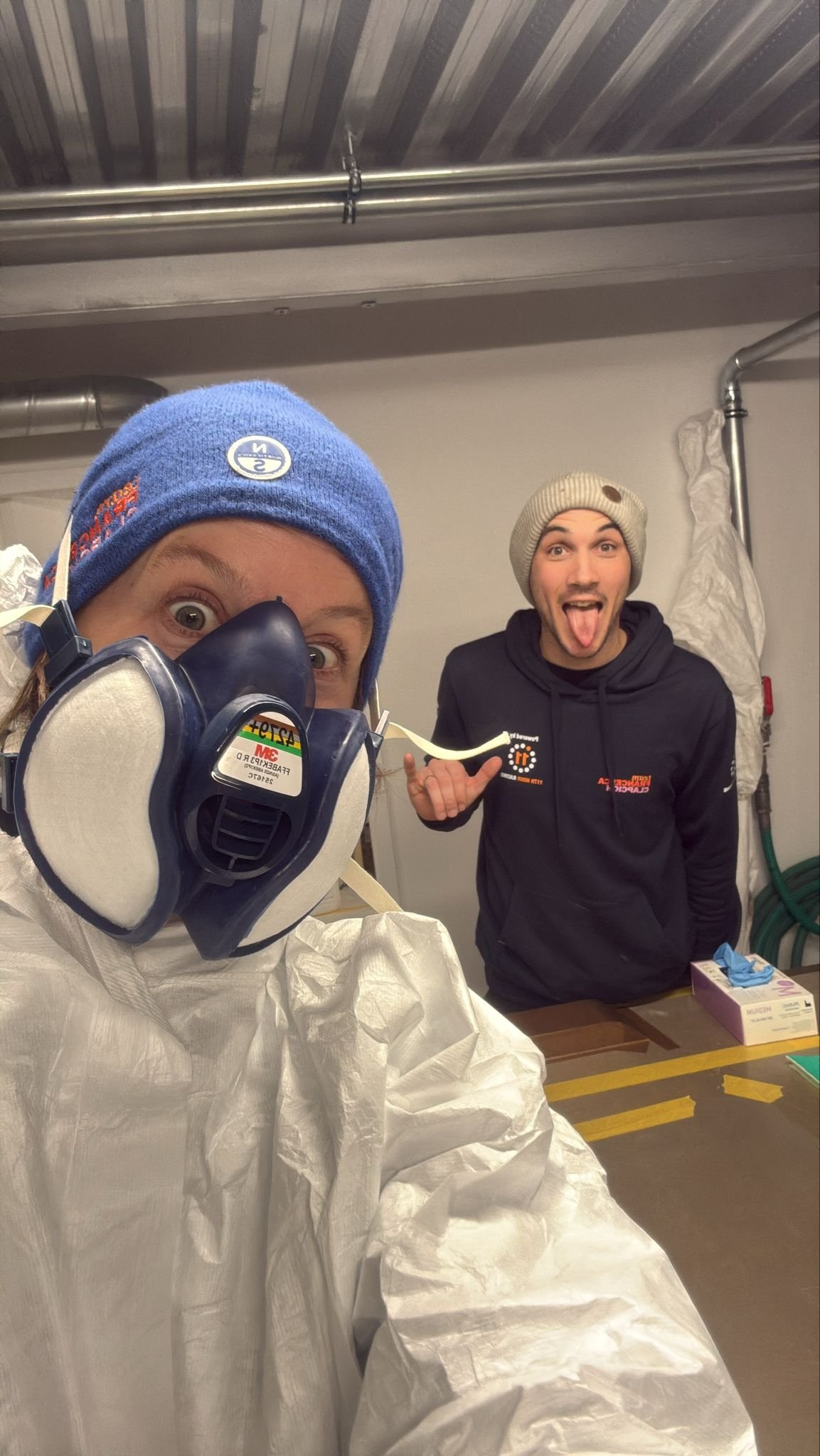
Close coordination between the technical team members and suppliers becomes crucial. “We have to work with suppliers and service providers to organize everything seamlessly so it’s all completed on time,” he adds. And this winter there was an additional constraint: a full repaint of the hull and deck. “All modifications and structural repairs had to be finished before the painters arrived. For most components we can anticipate what will need servicing, but unexpected breakages require a different organization.”
Moving weight forward, refining flight
Beyond repairs, performance gains have focused heavily on balance and how the foils behave.
With recent IMOCA developments, many designs carry weight further aft to help boats ride over waves in heavy conditions. But as knowledge evolves, so does the search for efficiency.
“We need to move the center of gravity forward to reduce the angle of incidence of the foils and avoid cavitation,” explains Noémie. “One of the biggest changes this winter was really shifting weight forward, for the foils to work properly, the boat needs to sail a little less on its stern.”
The modifications may not be spectacular from the outside, but internally it means rethinking placement, support, and structure. “You might think these aren’t major changes, but there’s a lot to consider like new supports to build and structural adjustments.”
The same search for balance led to one of the few visible changes on deck: the removal of the team’s so-called ‘upside-down Optimist’, a carbon box positioned in front of the mast. Originally installed to create lateral instability and help the boat right itself during the 90-degree stability test, it is now redundant thanks to alternative solutions. Its removal marks another small but symbolic evolution of the newly branded 11th Hour Racing IMOCA.
In addition, weight savings remains a permanent theme of the technical team’s work. “We are always trying to save weight,” Noémie shared. “We’re looking for the best compromise between reliability and lightness to go as fast as possible in the given wind.”
And the work is far from over. “With one month to go before relaunch, there’s still quite a lot to remove, to finalize in terms of weight relocation, and to reassemble. It’s started, but there are still many things to complete.”
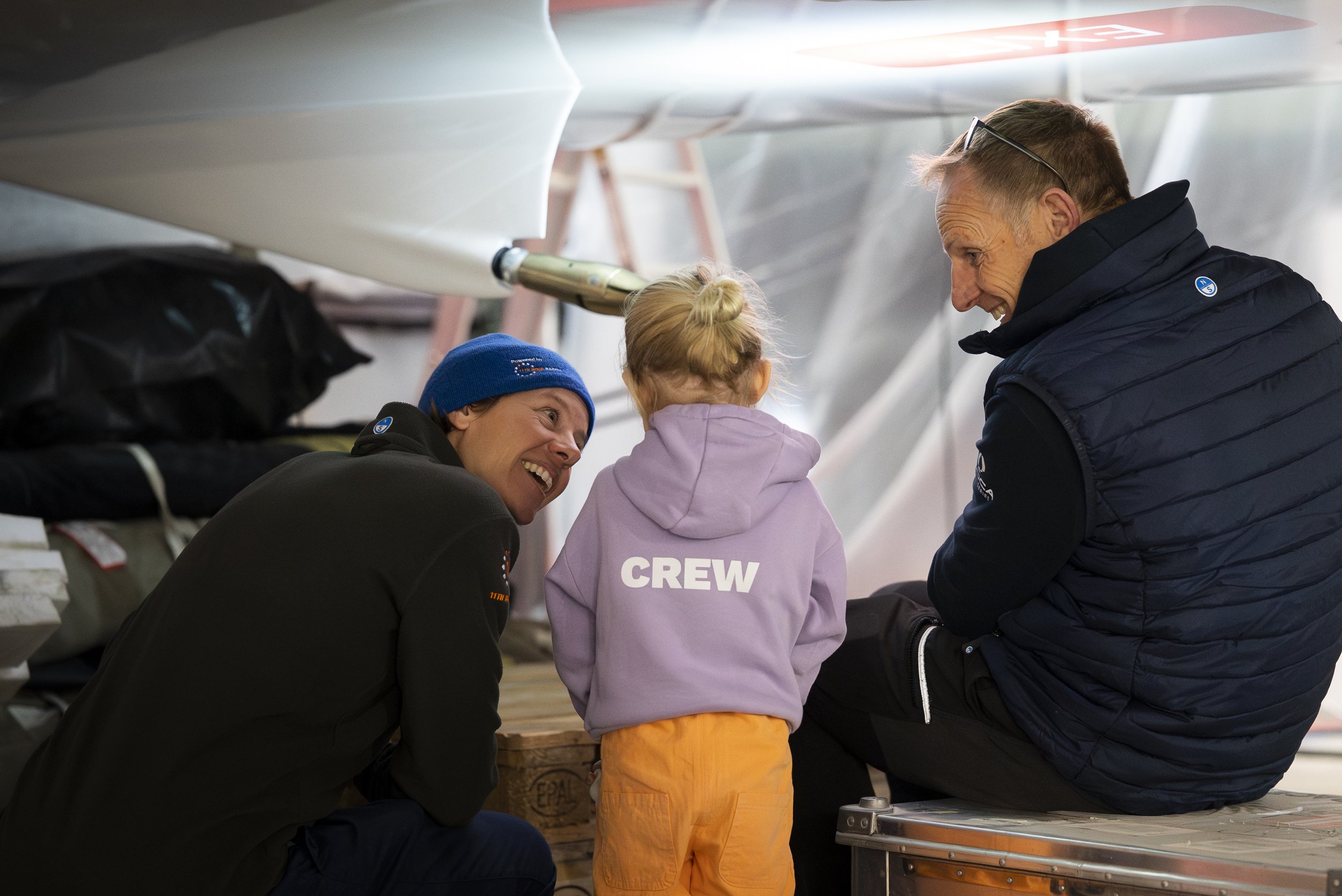
Maud Helfgott - polaRYSE / 11th Hour Racing
Building toward what’s next
Inside the cockpit, modifications remain modest for now. A few additional footrests have been installed, but no major ergonomic overhaul has been undertaken. The idea is for the cockpit developments to remain ongoing, as the team builds a precise understanding of Francesca’s needs over the course of the season, refining the setup from one race to the next. Rather than making sweeping changes all at once, they are choosing to adjust progressively, based on real offshore feedback.
At the same time, attention already extends beyond this winter. “We’re also thinking ahead to modifications during the season, to do what we haven’t had time to implement this winter,” Antoine added. “The goal is for Frankie to have a boat at its full potential, perfectly adapted to her, at the start of the Route du Rhum in November this year and of course in the longer term, the Vendée Globe.”
The most visible transformation will be the new look of the boat. Around ten members of painting experts Filumina have worked through the night for days giving the 60-footer a bold new identity.
The new livery will be unveiled on March 24, when the 11th Hour Racing IMOCA returns to the water in Lorient, marking the end of a full winter dedicated to the smallest details. And what a bold entry it will make.