
Vendée Arctique | Day 4 Report
After nearly four days at sea, Francesca is now making her final approach to the turning point at the line of latitude of the Arctic Circle - 66 degrees north - onboard 11th Hour Racing.
Following a rough and violent night, the 11th Hour Racing skipper is enjoying more moderate conditions as she sails upwind to the most northerly point of the race, working up the west side of the depression sitting to the east of Iceland.
Up ahead, as the race leader Sam Goodchild on MACIF Santé Prévoyance made his turn back south, 11th Hour Racing was holding fifth position with about 110 miles still to go to the turn.
Francesca was about 26 miles behind fourth-placed Ambrogio Beccaria on Allagrande MAPEI, and around 170 ahead of sixth-placed Arnaud Boissières on April Marine-Recherche Co-Partenaires.
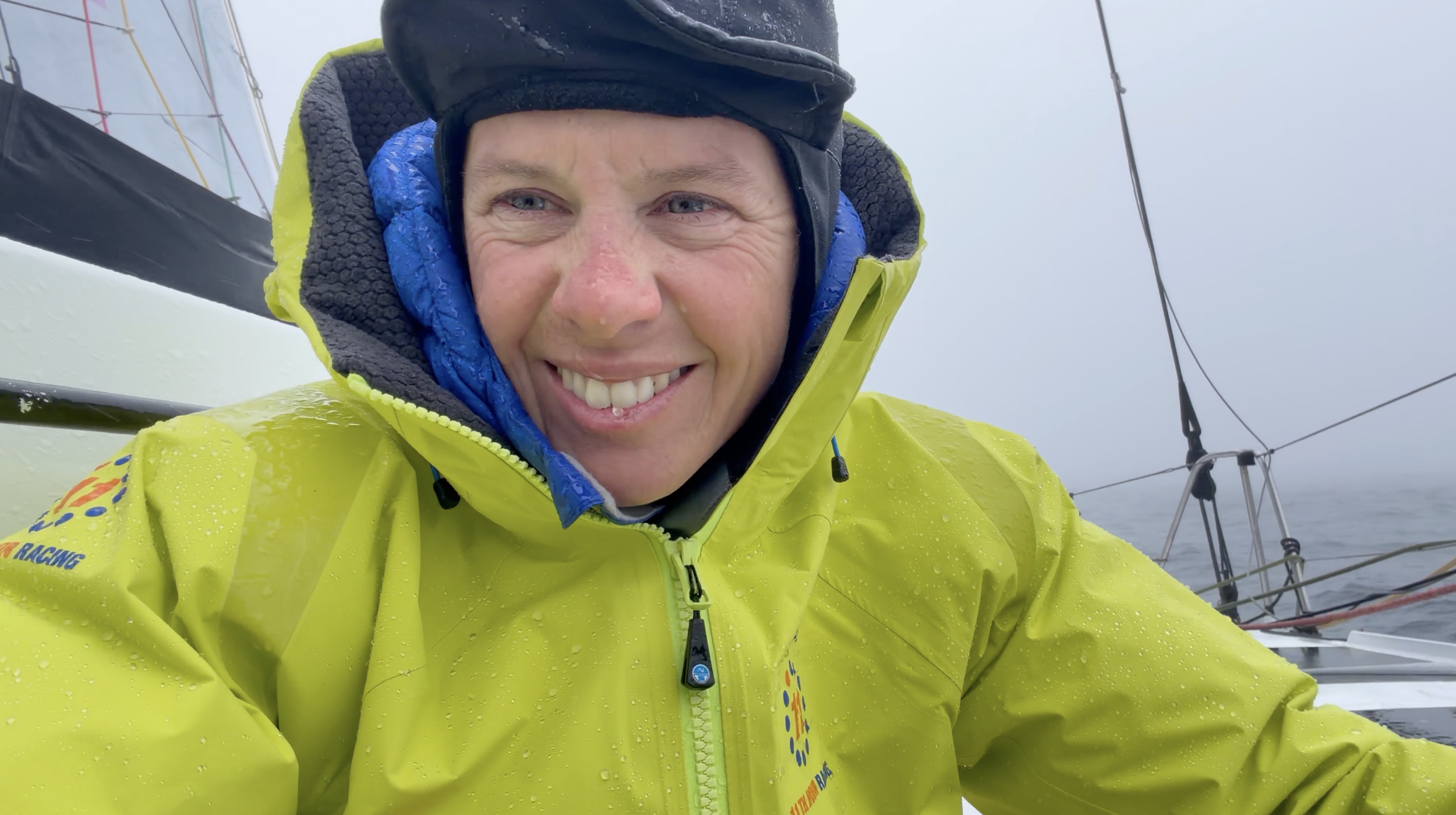
© Francesca Clapcich | 11th Hour Racing
It’s cold onboard and Francesca has been feeling exhausted after four challenging days at sea, after setting sail from Les Sables d’Olonne in the Vendée region of France, last Sunday.
“We are getting far north – it’s really cold on the boat – the air outside is Arctic!” she reported in her daily audio update from the cockpit. “It’s not that far to go to the virtual Arctic Circle, but it’s not super-easy or straightforward to get there.”
Francesca says she is enjoying a nice northwesterly breeze. “I’m going to expect a right shift, basically on top of the centre of the low pressure. I’ll tack on that and position myself on starboard and do a long starboard to get to the Circle. Timingwise, it’s quite hard to predict to be honest. It has been really up and down,” she explained.
She seemed reasonably happy about this tricky phase of the race, when the boats came close to the centre of the depression and light winds. “It looks like this flow of wind is settling into the right direction. It should be northeasterly, the breeze that we get to get up there. We are basically doing the round of this low pressure from the west, instead of from the east – so the uncomfortable way,” she said.
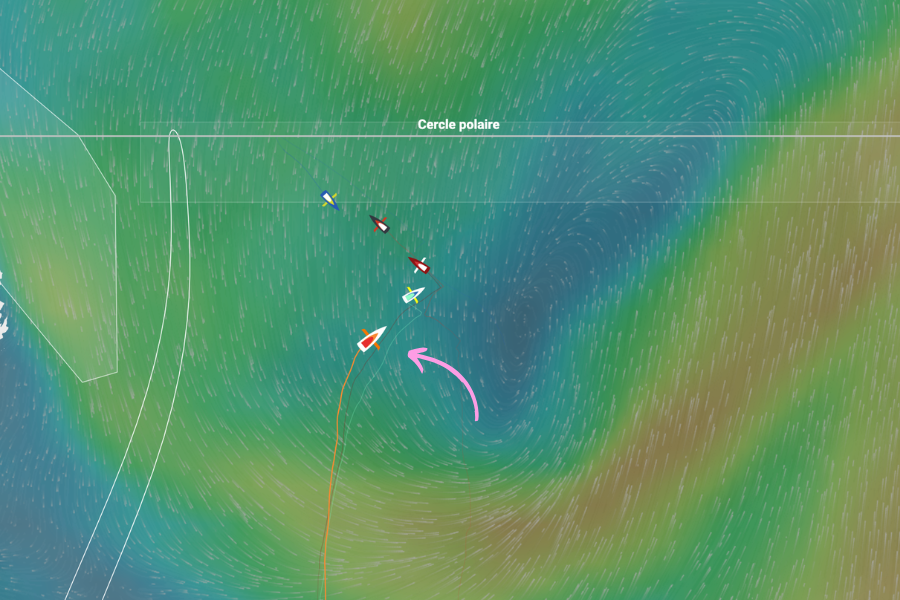
Follow Frankie on the tracker here
Overnight Francesca endured a very rough ride in a gusty, cold and strong northwesterly wind blowing off the northeast coast of Iceland. “The way to get here has been … I mean … to call it sporty would be an understatement. It was really, really bouncy and up to 32 knots of wind, so I am enjoying conditions that are a bit more mellow and being able to rest a little bit more and finally recover.”
Francesca has been spotting puffins on the wavetops, one of her favourite birds. “I love them,” she enthused. “I call them flying penguins. They are little birds similar to seagulls, but look a little bit like penguins too. Around the coast of the Faroe Islands and Iceland, you can see them a lot. They are the most I have seen because, to be honest, I haven’t spent that much time outside. It’s really, really harsh weather out there, so I stay cosy inside the boat.”
On the way south, Francesca is expecting some good downwind sailing and then she is thinking about what to do when she gets to the north coast of Ireland – whether to go around the outside to the west, or to sail between Northern Ireland and Scotland via the North Channel, and into the Irish Sea. This is the most direct route and it may also be the fastest.
“I mean, to be totally fair, I am not a big fan of this option,” she said. “It’s quite narrow and we are sailing solo after so many days of hard racing. If that’s going to end up being the only option, then, of course, I'm going to do it. But if there is something better than that, I will probably take it.”
At 64 55 N 006 W, at 1045 CEST (0845 UTC) Francesca deployed her a 28kg weather buoy with a 15m long drogue anchor which will capture atmospheric pressure, ocean surface temperature, and currents at 15m deep, with the data sent in real time to Météo France, the official French meteorological administration.
She wrote two messages on the buoy before deploying it. The first, “To my daughter, Harriet, be curious! Enjoy life!” and the second, “Curiosity and science show to us a different world full of incredible nature.”