
© Marin Le Roux, polaRYSE | 11th Hour Racing
What does it take to compete in the 2028 Vendée Globe?

Double Olympian and round-the-world sailor, Francesca Clapcich, along with her Title Sponsor, 11th Hour Racing, have announced their ambition to see the Italian-American on the startline of the 2028 Vendée Globe.
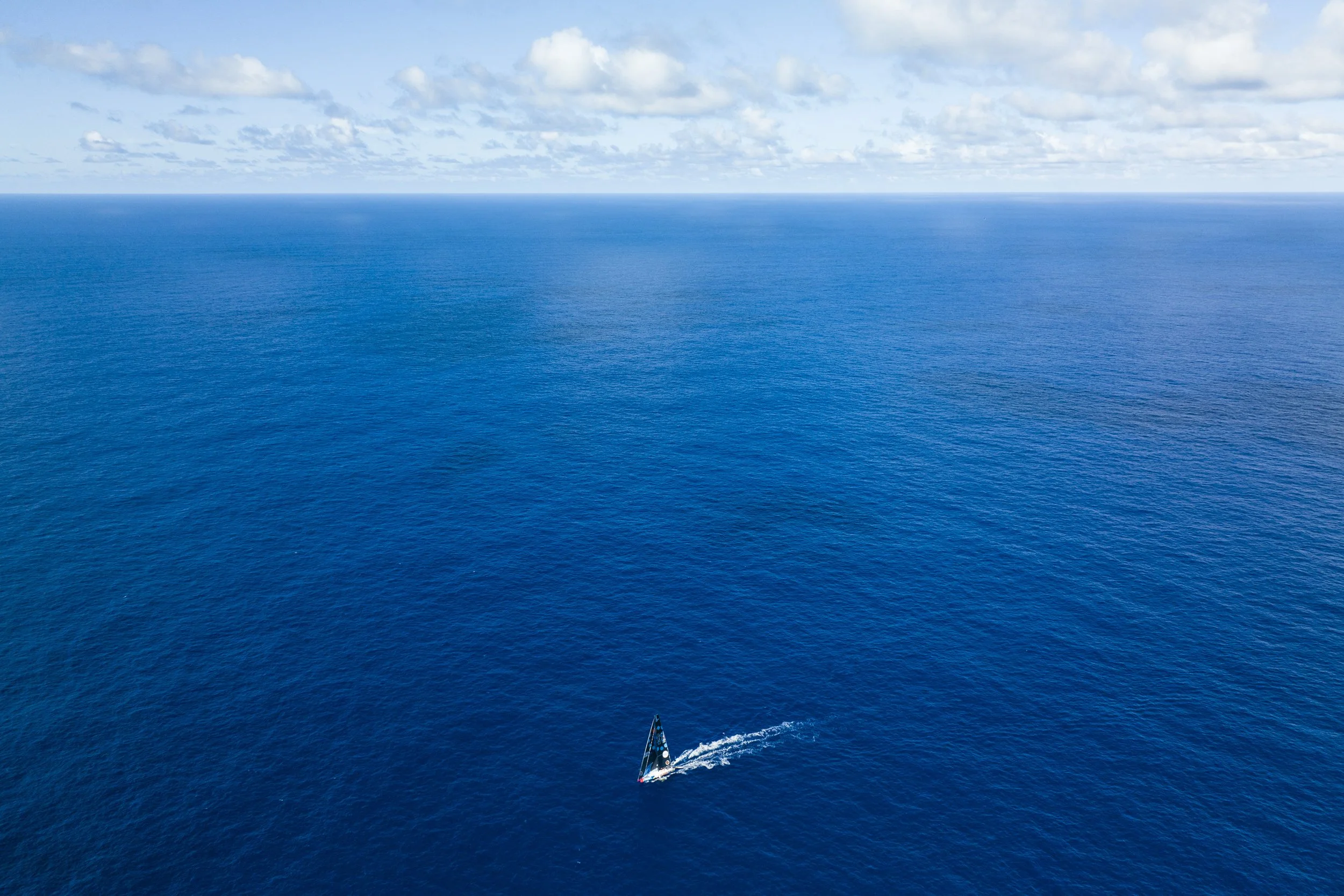
The race has a formidable reputation - solo, non-stop around the world - and is seen as the pinnacle of solo offshore yacht racing.
In October 2025 Team Francesca Clapcich Powered By 11th Hour Racing will take ownership of Malizia-Seaexplorer, the 60-foot IMOCA race boat that Boris Herrmann has just sailed around the world in the 2024 Vendée Globe.
Team Francesca Clapcich will set up base in Lorient, France, the home of offshore yacht racing, alongside Herrmann’s Team Malizia, which will act as Technical Partner for the new campaign.
Three Great Capes
The race begins in Les Sables d'Olonne, on the west coast of France. It follows an easterly route around the planet, passing the three great capes - Cape of Good Hope, Cape Leeuwin, and Cape Horn. Frenchman Charlie Dalin set the current circumnavigation record of 64 days, 19 hours, 22 minutes, and 49 seconds in the 2024 edition, onboard Macif Santé Prévoyance.
Every four years, millions of fans swarm the town, eager to catch a glimpse of their nautical heroes and walk the docks to view the boats. The boats can be followed 24/7 on the race tracker, and there is also a virtual reality race where fans can race against the fleet … from the comfort of their own home!

The IMOCA boat
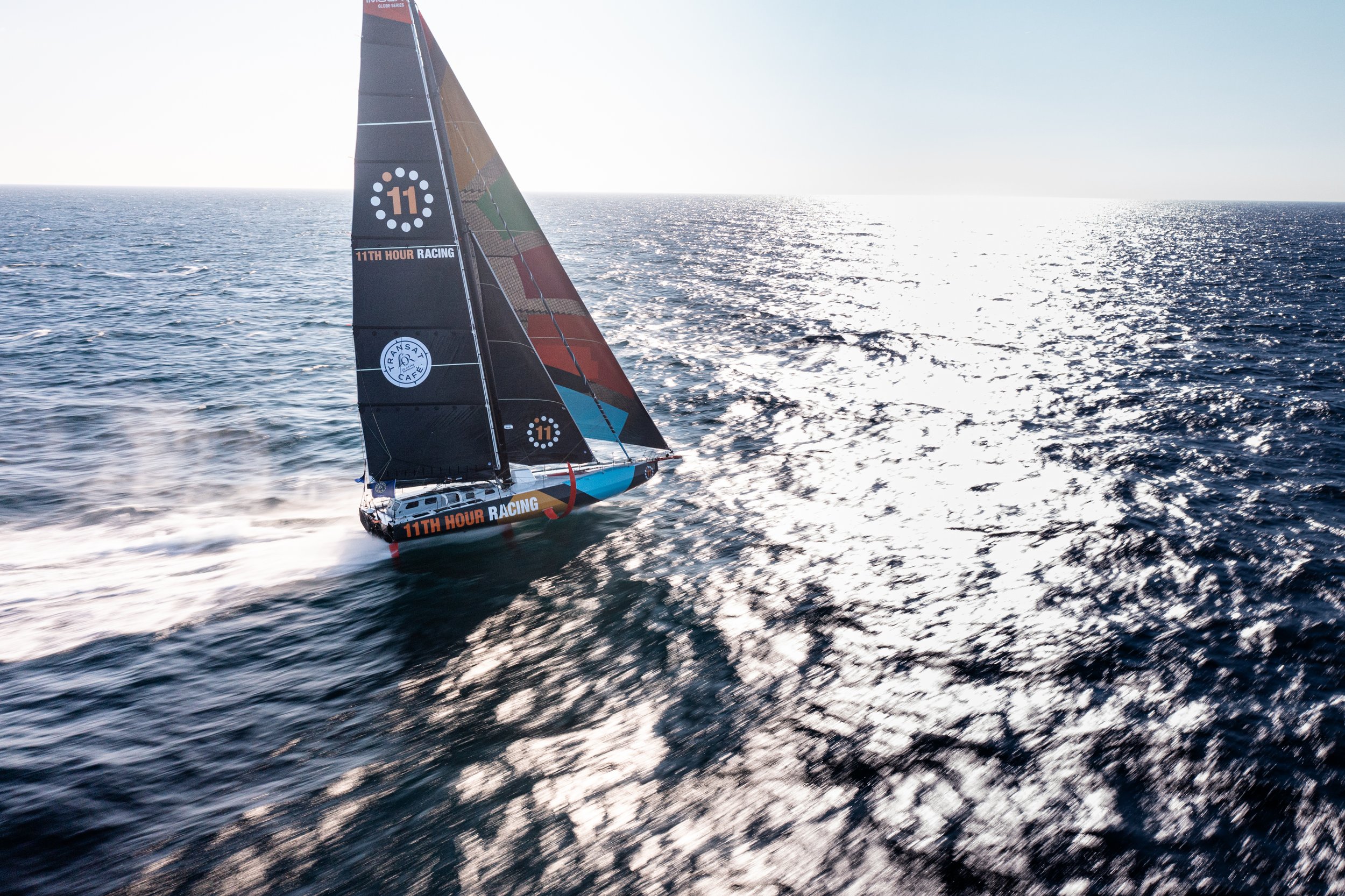
Each sailor races a 60-foot monohull, called an IMOCA. Designed under the ‘box rule’, the boat’s hull must be 18.28 meters long (60 feet) with 4.5 meters (14.8 feet) of draft. These are the most powerful monohulls raced solo today, with a combined sail area of 1,370m2, and able to reach up to 30 knots (35mph/56kmph). The IMOCA rule states that certain boat parts must be the same on all boats - the mast, sails, keel jack, boom, J2 staysail, and runners. The sailors and their design team have control over the rest; this includes the design of the foils, which lift the hull off the water and reduce drag.
Team Francesca Clapcich Powered By 11th Hour Racing will take over Boris Herrmann’s Malizia-Seaexplorer from October 2025.

© Marin Le Roux, polaRYSE | 11th Hour Racing
Life onboard
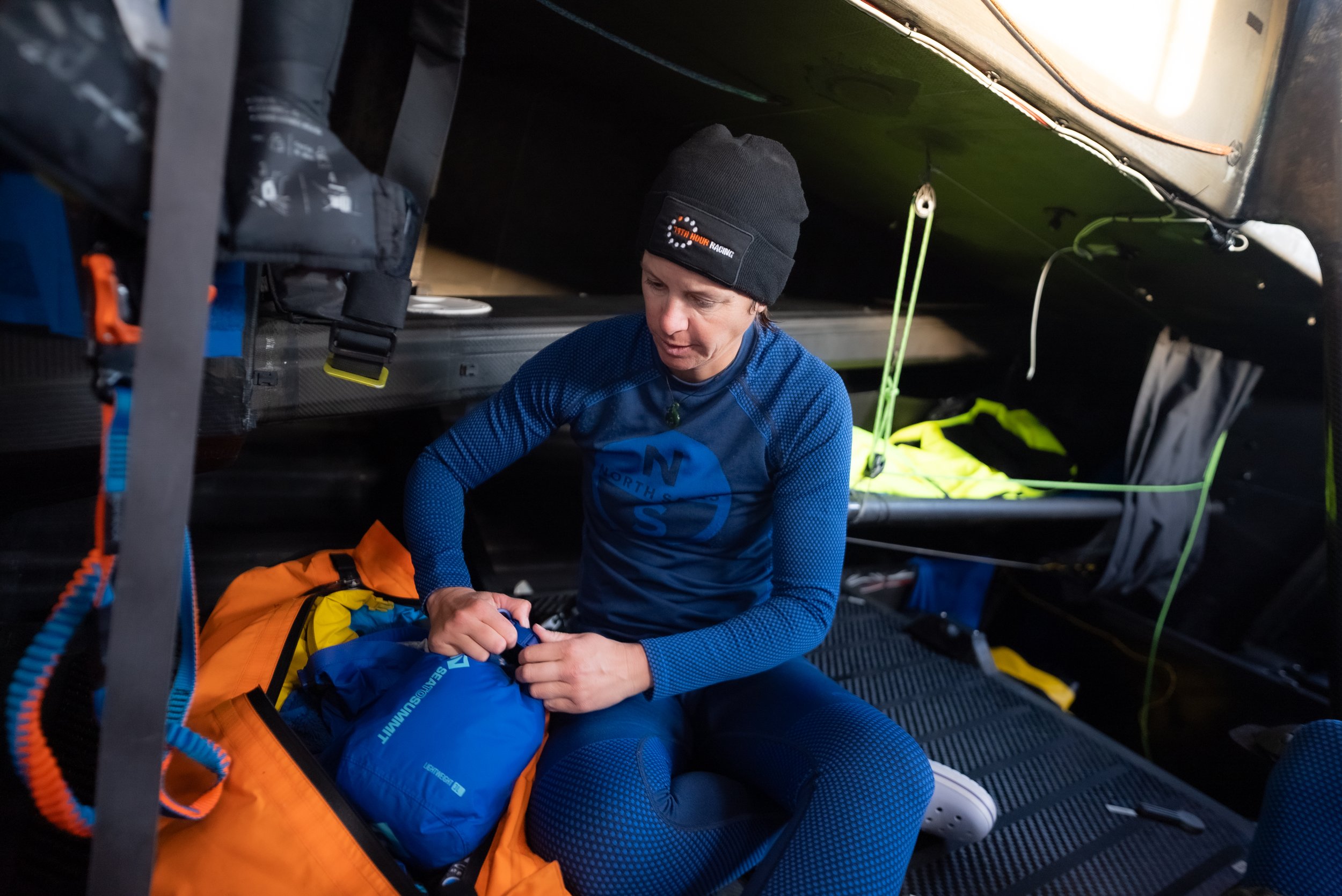
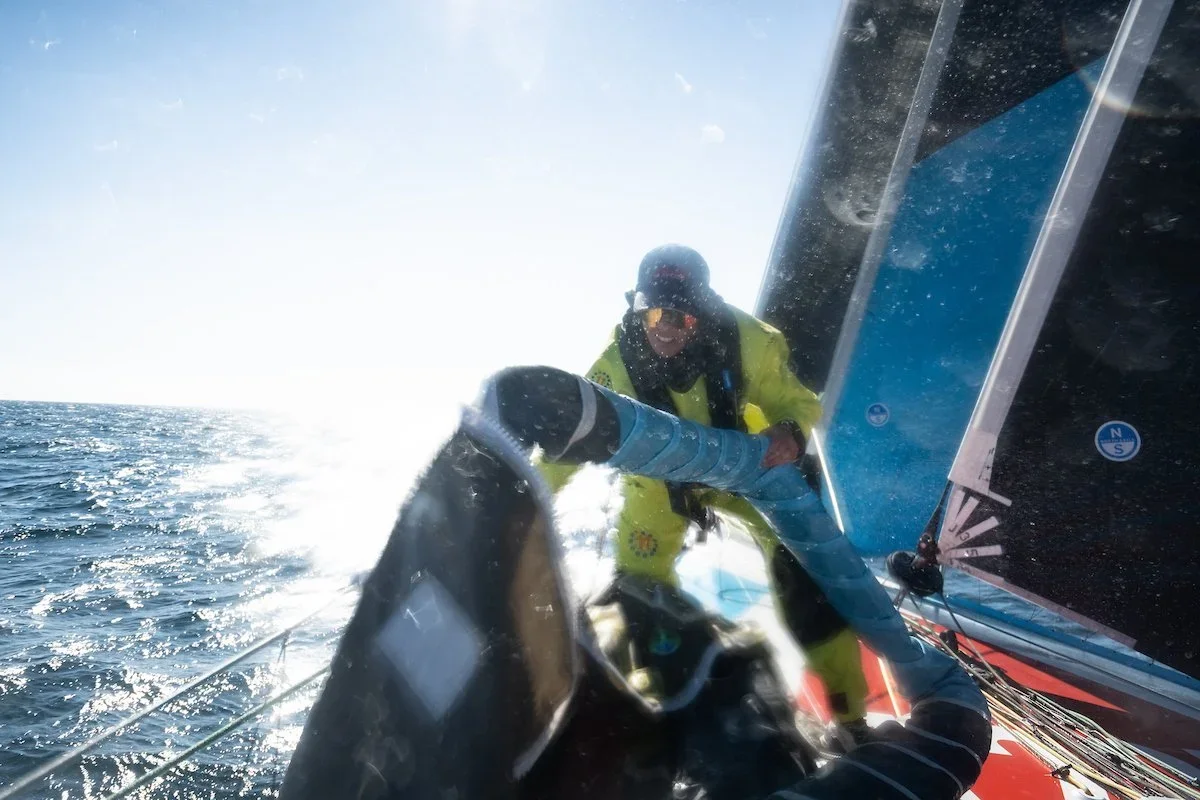
Life onboard an IMOCA can be pretty tough. Sailors consume 5,000 calories a day, eating rehydrated ‘astronaut’ food. They have to use an onboard watermaker to make clean, sanitary water, and they have no toilet or shower - two buckets and one sponge is all they use! As they race around the world they will experience temperatures as high as 113°F (45°C) and as low as 5°F (-15°C) - and it can even snow onboard when in the deep Southern Ocean. Every sailor in the fleet receives the same weather information - no outside assistance is allowed - and they communicate with their family and shore team through satellite phone, email, and even WhatsApp.

© Marin Le Roux, polaRYSE | 11th Hour Racing
Onboard science
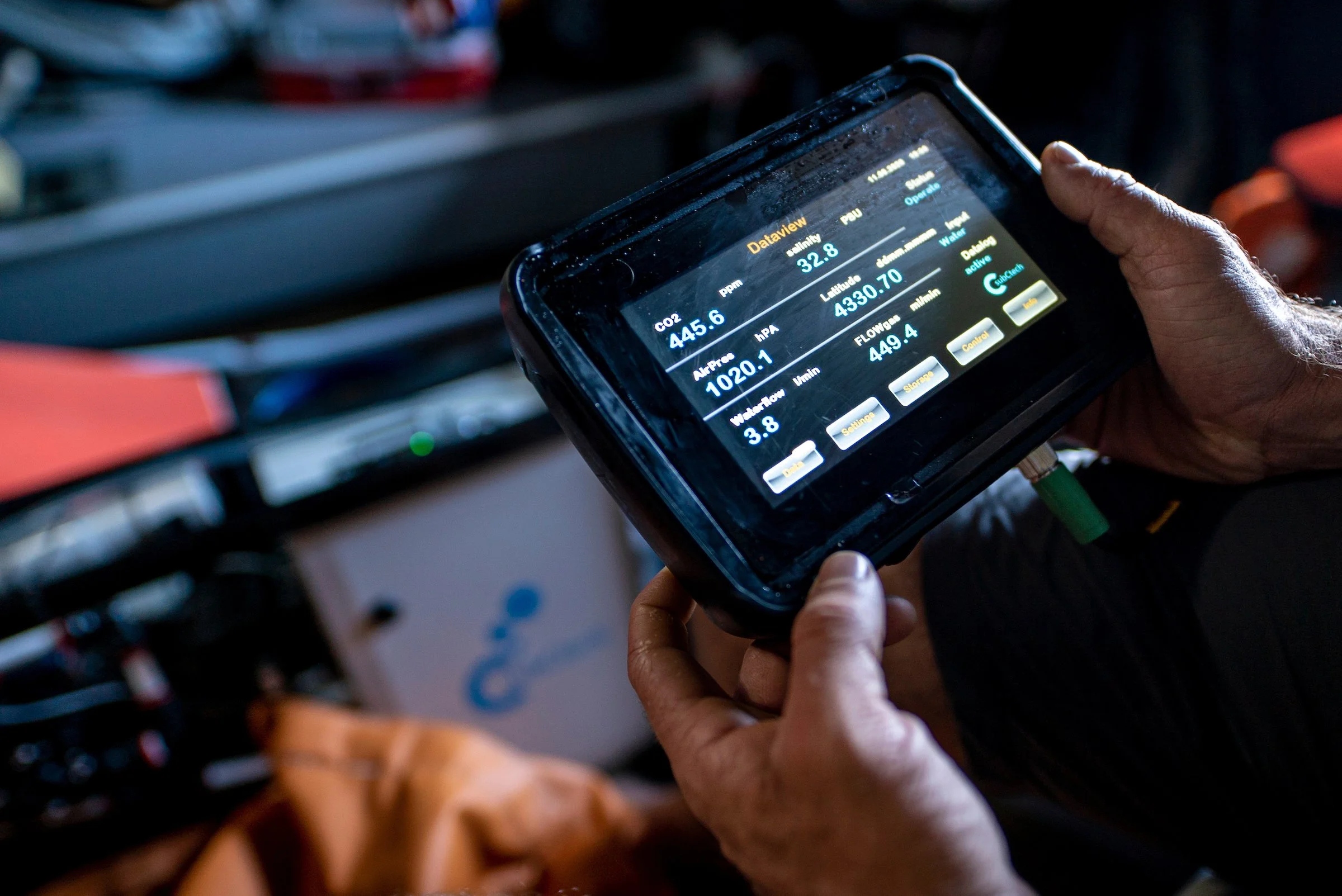
Many teams now carry scientific equipment to take samples to assess the health of the ocean while they are racing. In The Ocean Race 2022-23, 11th Hour Racing Team gathered water samples to test for CO2 levels, trace elements, and salinity, and measured sea surface temperatures. This data was sent off the boat in real-time back to scientists in Europe to study the impact of climate change on the ocean. In addition, while the team was racing through some of the most remote locations on Earth, they deployed drifter buoys, which sent back data by satellite on currents and temperatures and are used by scientists and meteorologists worldwide.

© Amory Ross | The Ocean Race | 11th Hour Racing
© Marin Le Roux, polaRYSE | 11th Hour Racing
During the Vendée Globe you are alone at sea for months, in such an uncomfortable environment - it will take a lot of preparation and hard work to perform at the highest levels of the race. I will need to be physically strong and mentally tough, especially being away for so long from my wife and daughter.
– Francesca Clapcich

Keep up with the team
Subscribe to receive news and updates.