
Starting safer: inside the race to keep whales and sailors out of each other's way
The Marine Mammal Advisory Group is working closely with The Ocean Race Atlantic organizers and the teams to minimize the risk to marine mammals - one exclusion zone, one dataset, and one hazard report at a time.
Emily Caroe, an ambassador for the Marine Mammal Advisory Group and head of communications and purpose for Team Francesca Clapcich Powered by 11th Hour Racing, takes a look at the work that is being done behind the scenes.
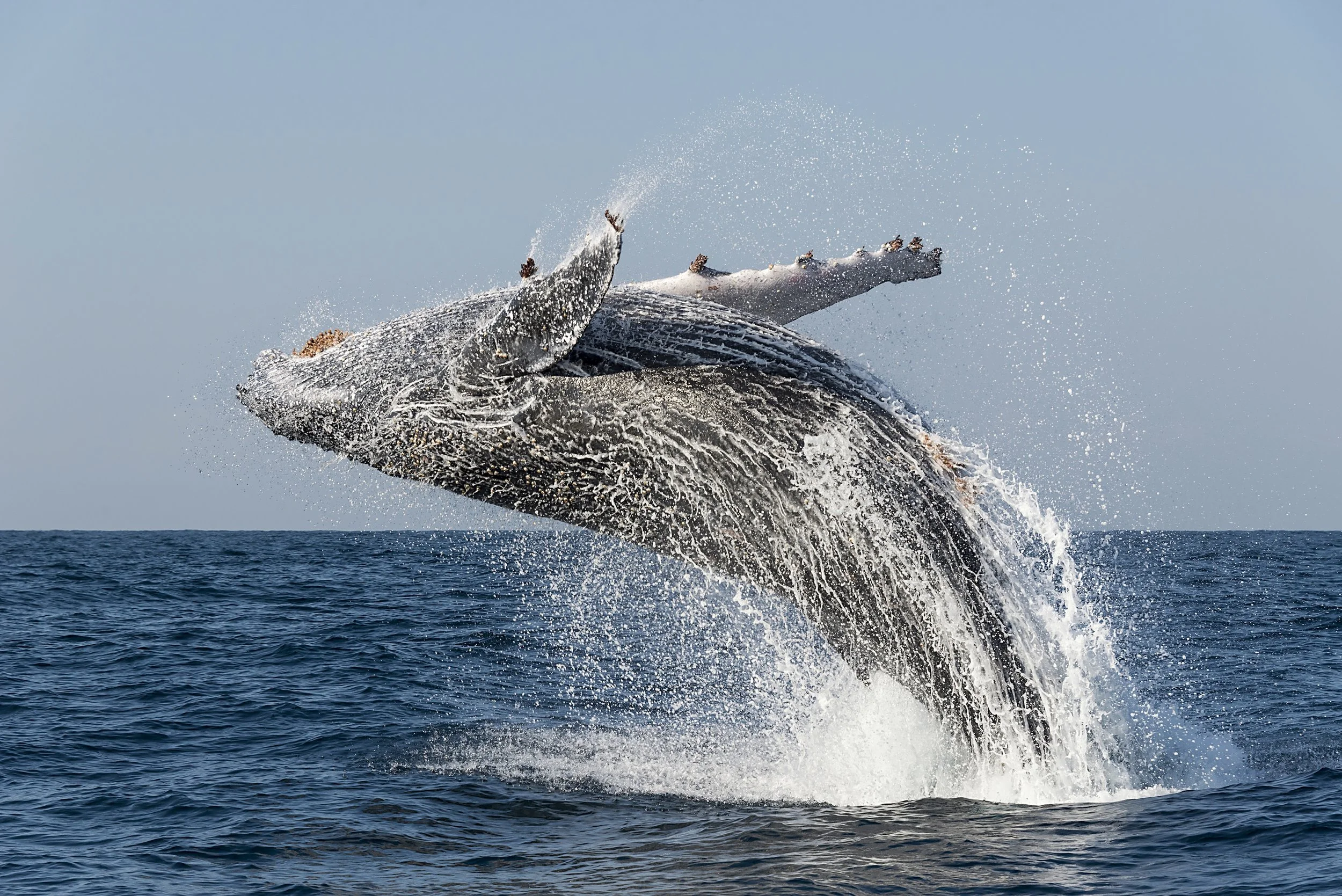
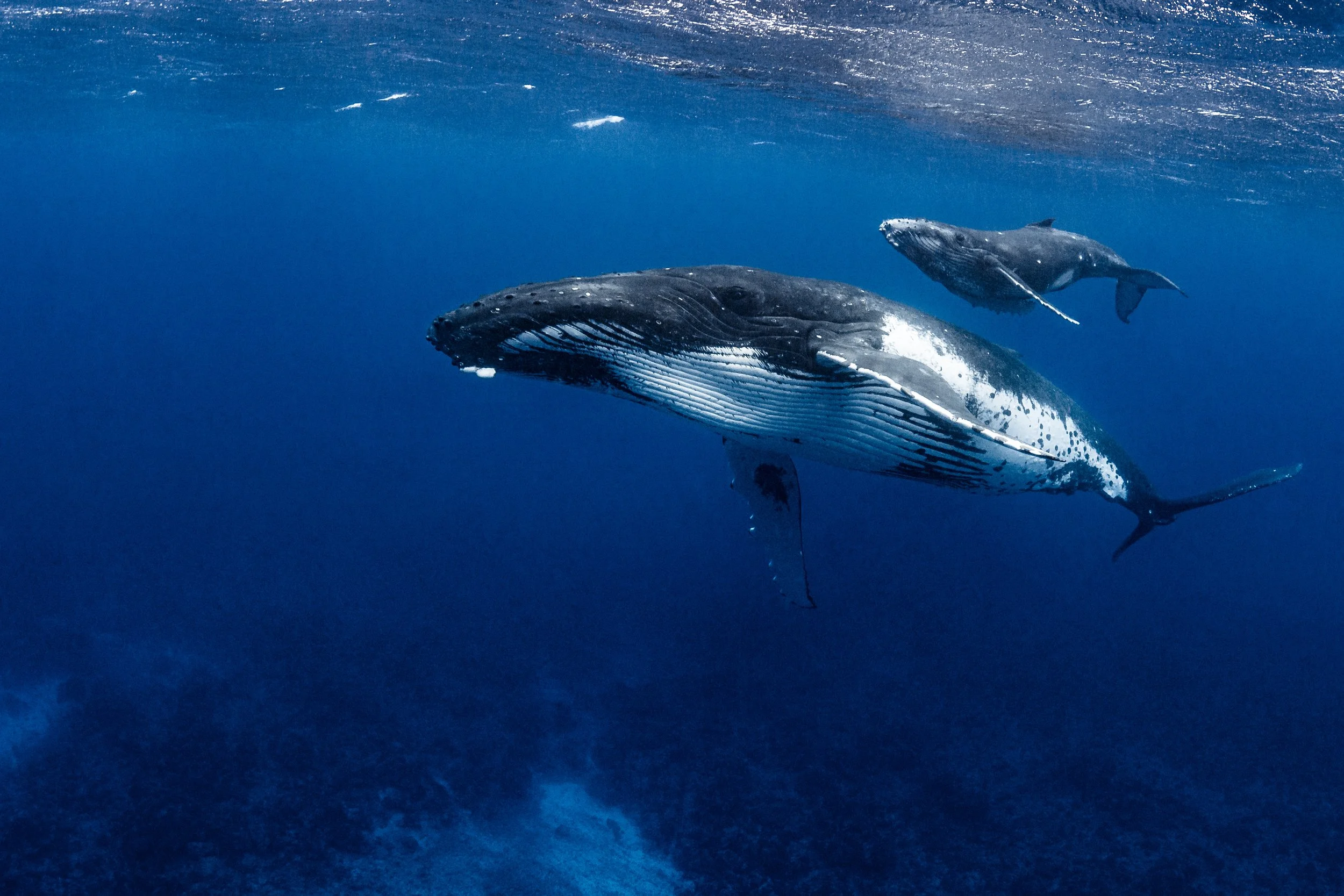
Ten days before the start gun for The Ocean Race Atlantic, a humpback whale surfaced in the Hudson River. A few days later, another was photographed off the Statue of Liberty - the exact stretch of water where six IMOCA teams will take their exhibition start on 1 September, before turning east and powering across the Atlantic, destination Lorient, France. It's a reminder of something easy to forget from our dock here in Brooklyn: New York Harbour isn't just the backdrop for the six, 60-foot race boats taking part in the inaugural Ocean Race Atlantic, it's also a popular area for some of the ocean's most endangered animals.
That collision of interests - quite literally, in the worst case - is exactly what the Marine Mammal Advisory Group (MMAG) exists to prevent. I sat down with Damian Foxall, who leads the group, to find out what it takes to send a fleet of 60-foot foiling machines across the Atlantic while minimizing the risk of sailing through waters that are inhabited at this time of year by marine mammals.
Why does a sailing race need a marine mammal strategy?
"The purpose of the Marine Mammal Advisory Group is to bring together the sailing and boating sector around the protection of marine biodiversity," Foxall explains, "and specifically looking at reducing the risk of collisions between vessels and marine megafauna - which is a big part of the work that we've been doing for this Ocean Race Atlantic over the last few months."
In practice, that means acting as the connective link between everyone who has a stake in the problem: sailors, teams, class associations, technology providers building forward-facing cameras, and the scientists trying to understand where the animals actually are.
MMAG's approach rests on six pillars:
Sourcing the most credible and current scientific data
Using it for safe route planning
Reporting what crews see and encounter at sea
Layering in citizen science wherever it's available
Making smart use of watchkeeping technology
Sharing education and outreach, which is what sat behind the World Sailing Guidelines for Megafauna in Sailing published in December 2025
"How do we take the risk, resources, and responsibility of the sailing community," Foxall asks, "and put them at the service of the science community?"
That matchmaking - his word for it - is the piece that turns a race fleet into a genuinely useful data source, not just a group of boats trying not to hit anything.
A migratory highway, right through the finish line
The reason this race in particular carries so much weight starts with geography. "The eastern seaboard of the USA has historically been, and still is, a huge area of biodiversity," Foxall says. "We've seen it literally here in New York - there are humpback whales right up the Hudson River, and even in the last few days we've seen sightings right off the Statue of Liberty."
That richness runs the length of the coast, out to the edge of the continental shelf and up into Canadian waters - home to the North Atlantic right whale, one of the rarest large whales on the planet. Fewer than 360 individuals remain, and of those, fewer than 200 are breeding-age females.
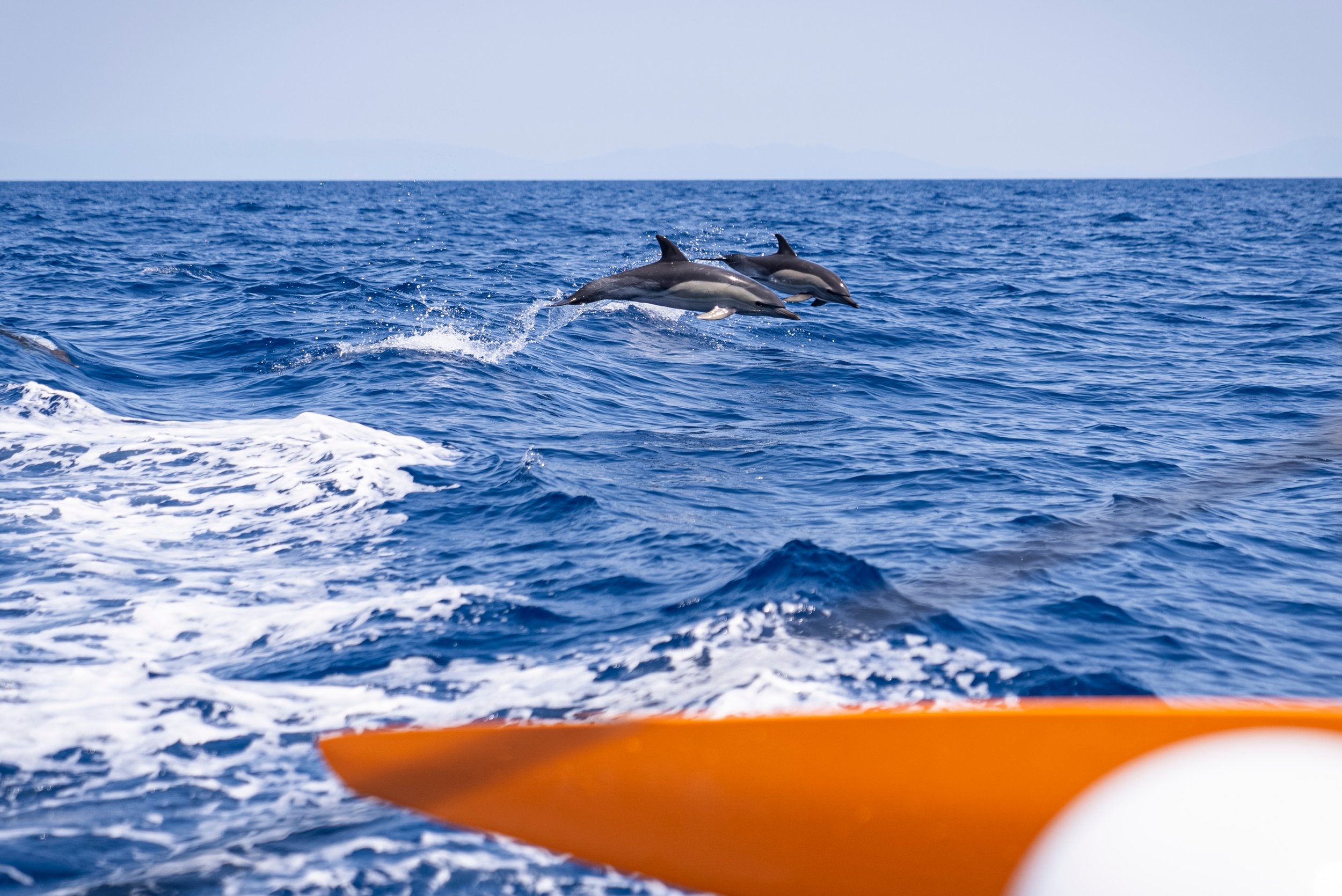
The transatlantic leg doesn't get any quieter once the fleet clears the coast. "The humpback highway goes right through the middle of the Atlantic," Foxall notes, and the stretch of ocean between the Arctic and the Azores is important habitat for blue and sei whales - before the fleet arrives into equally rich European waters on the other side. Given past races (and one team’s delivery into Newport, RI a few weeks ago) have recorded physical encounters with marine life, the organizers, Foxall says, "wanted to do the very best to mitigate that risk."
Why the fleet is starting further offshore
The result is visible in the race's own start plan. The Ocean Race Atlantic's exhibition send-off keeps the fleet close to shore - in front of the Statue of Liberty, perfect for the media and spectators - before the true start line is set further offshore early morning on September 2, once the boats have cleared the most sensitive inshore waters. It's a small logistical shift with an outsized purpose.
The organizers describe it as part of a wider effort to design "a route that reduces the risk of encounters with marine megafauna whilst providing a compelling and challenging race course" - one they hope, according to The Ocean Race Atlantic, "will give an opportunity to set a fully-crewed IMOCA / The Ocean Race standard for the Atlantic crossing on a course that respects marine biodiversity."
Foxall is unequivocal about how that conversation went with the teams and organizers. "I think it's not even a question of whether they're open to it - it's now essential," he says, pointing to the modern IMOCA's huge foils, twin rudders, and deep keels. "They just want to be able to race on the safest, most competitive race course possible, and where we can identify specific areas of high risk and exclude them as exclusion zones, then everyone's happy."
The science behind the exclusion zones
Behind every red zone on a routing chart is months of data work. MMAG's science team pulls together the datasets it can find, some global, some hyper-local, like "someone out in the Azores doing a very specific study", and overlays them with marine protected areas. A simple algorithm then scores each grid square for species density and protected-area overlap, sorting the ocean into low, medium and high risk.
"That gives them the confidence that a scientific approach has been taken to understanding these areas," Foxall says, "and they can allocate, more precisely, these areas of exclusion - or, in this case, they've actually started the race 100 miles offshore."
Local knowledge matters just as much as the global picture. "It's critically important in these areas to look for those local scientists," Foxall says, crediting Gotham Whale and the New York State Department of Environmental Conservation for supplying regional, recent data from right outside - and inside - New York Harbour. "It's about pulling all that together and summarizing it in a way that's digestible for the race organisers and the teams."
Turning every boat into a sensor
MMAG's other major project is quieter but arguably just as consequential: a global hazard reporting network. It started years ago by building hazard reporting directly into Adrena, the navigation software used by The Ocean Race fleet and the ULTIM class, and has since extended into Expedition, the software favoured across much of the English-speaking sailing world. Crucially, all of it now feeds into Whale Alert, part of a much larger reporting network.
"Whether you're standing on the shore, out on a cruise boat, a kayak, a racing boat or even a ship, we're now reporting into the same connecting network what we see and what hazards are out there," Foxall says - data that matters immediately, for live vessel safety, and cumulatively, by sharpening the hotspot maps used to plan the next race.
© Amory Ross | 11th Hour Racing | The Ocean Race
What comes next?
Two projects define MMAG's near-term horizon. The first is expanding that reporting network's reach: Whale Alert is working with government and policy bodies to make hazard reporting a standard feature of marine electronics, not an opt-in extra. The second is scaling up the risk-mapping work done for races like this one - commissioning studies under a shared protocol, race by race, until the pieces form a single picture.
"The aim is two years from now to have mapped ... the oceans of the sailing world," Foxall says, "so you can actually run that into your navigation software and do a whale routing" - a tool he sees benefiting recreational and school sailors just as much as professional fleets. The end goal is a common approach across every race, "so we don't have to redo the exclusion zone ... because it's commonly understood that this is the area."
I put one obvious tension to him directly: does sailing take unfairly harsh media coverage when a race boat hits something, simply because it's more visible than, say, a cargo ship?
"It's got two edges to that sword," Foxall says. "For sure, we are the canaries in the coal mine - as small boats, we know immediately when we see, or hit, something, and that gives us the opportunity to illuminate this wider issue. But the other side is it doesn't remove our own obligation to really understand where these areas are and avoid them - especially for high-speed foiling boats with multiple appendages, where the risk is way higher than a traditional sailing boat. So we are part of the problem. We are definitely part of the solution."
As the fleet lines up off the Statue of Liberty today, that's the balance The Ocean Race Atlantic is trying to strike: a genuinely fast, genuinely competitive transatlantic course, plotted around the animals that call this ocean home. It's a model worth watching - and one we'll be following all the way to the French coast.
