
Francesca Clapcich - a stellar first season in IMOCA
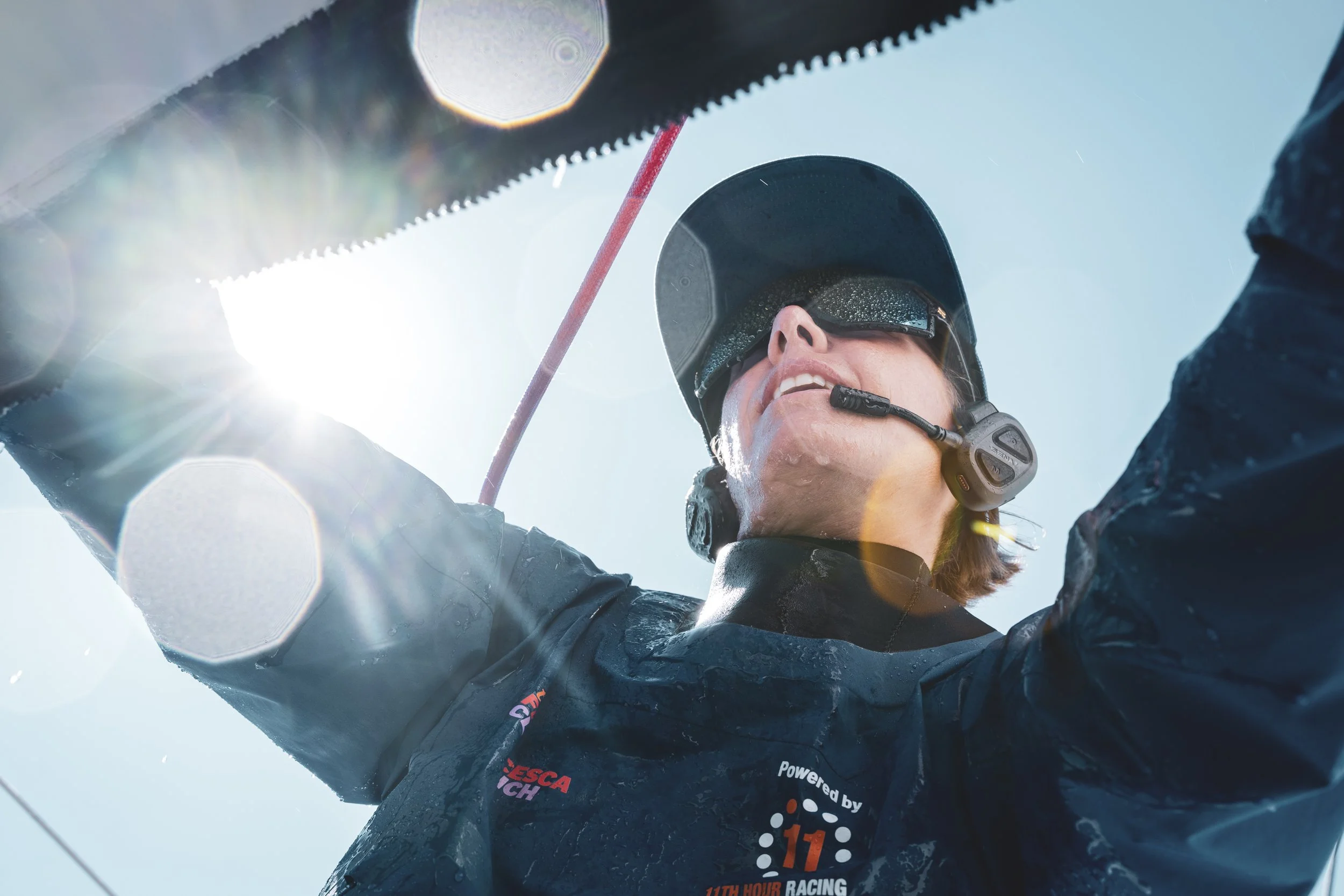
Maud Helfgott - polaRYSE / 11th Hour Racing
With one or two notable exceptions, it is unusual for someone to come into the IMOCA Class and then top the rankings at the first time of asking, but that is what the Italian-American skipper of 11th Hour Racing has achieved this season as she heads into the final race of the year.
Francesca Clapcich announced herself on the IMOCA stage by finishing second in her first two-handed transatlantic race - the Transat Café L’OR last year alongside Will Harris - and has followed that up with two fifth places this year, in the 1000 Race and the Vendée Arctique, plus second place at the head of a crew in The Ocean Race Atlantic.
It means that Clapcich, 38, who lives in Utah, USA, is the IMOCA Globe Series championship leader for 2026 going into the season finale race - the Route du Rhum-Destination Guadeloupe, the infamous solo transatlantic between France and Guadeloupe, - which will be her biggest solo test to date.
All in all, it has been a stellar performance from Clapcich who looks equally at home leading a crew on the water as she does racing alone. A brave, tough, and highly competitive individual, Clapcich is determined to keep improving and was clearly gutted not to have clinched victory in The Ocean Race Atlantic after finishing a close second behind Paul Meilhat’s United by the Ocean.
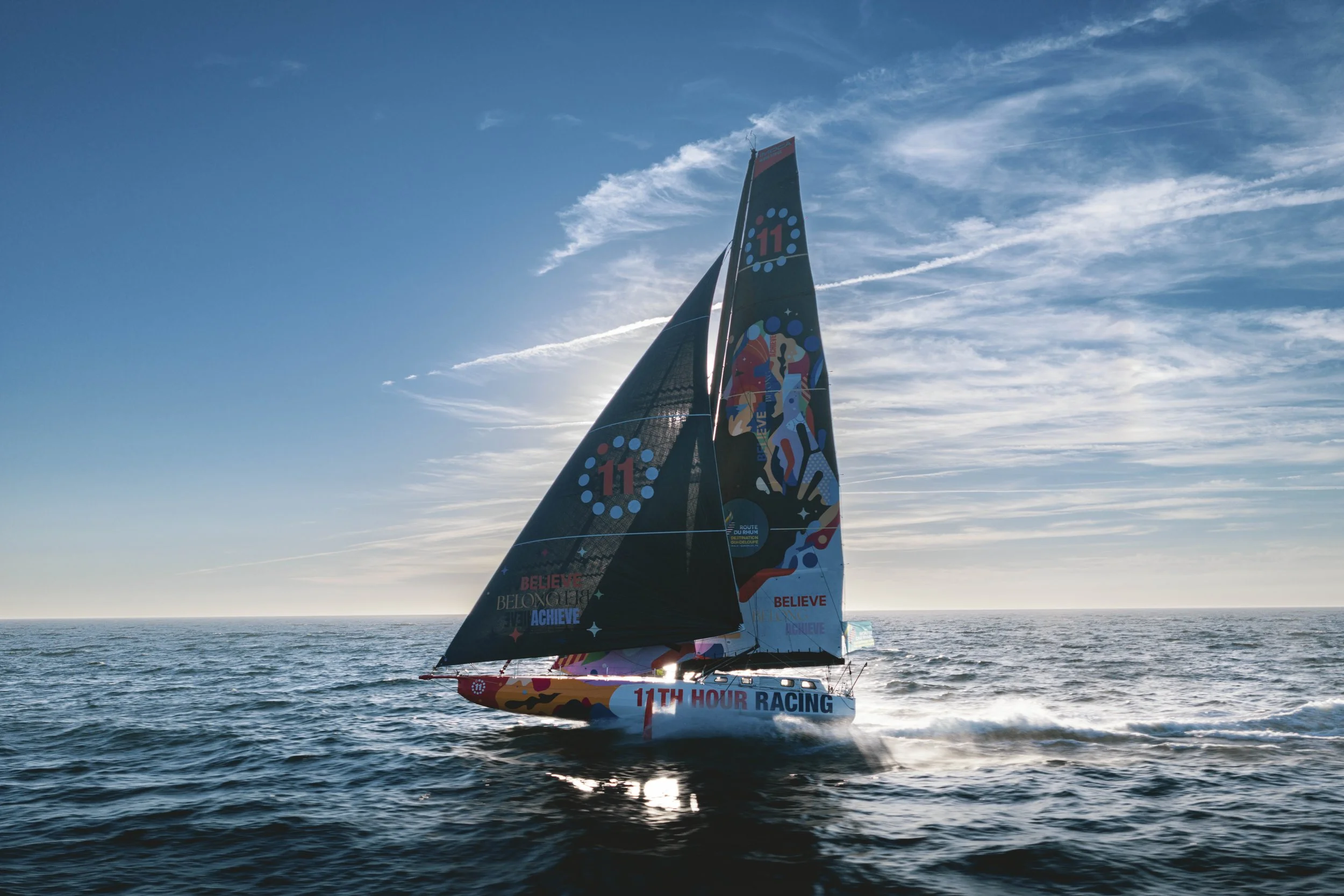
Clapcich is more than a racer though. She has come into the IMOCA Class with a clear set of values in life and she uses the platform professional sailing gives her to advocate for them. Key among them is her Believe, Belong, Achieve campaign - her commitment to diversity, equity, and inclusion, the importance of belonging in the sport, and to the rights of the LGBTQ+ community, while climate justice and sustainability are also high on her agenda. For Clapcich IMOCA racing is about winning, but it is also about sharing her values and trying to make the world a better place, something that fits perfectly with the goals of her title sponsor, 11th Hour Racing.
On the sailing side, a fascinating aspect of Clapcich’s rise to the top of the IMOCA fleet is the route she took to get there. The classic French ladder, climbed by many of her solo French rivals, consists of the Mini class, then the Figaro, and then Class 40, before graduating to IMOCA. By contrast, Clapcich, who started her career in her home waters of Trieste on dinghies and later joined the Italian Air Force, was an accomplished two-times Olympic sailor before she moved offshore, but even then not into solo racing. Her early experiences in big boats were as part of crews in the 2017-’18 Volvo Ocean Race (Turn the Tide on Plastic) and then as part of the Ocean Race-winning 11th Hour Racing Team in 2022-’23. Prior to IMOCA, her biggest offshore solo achievement was completing the 2021 Solitaire du Figaro and winning the Fighting Spirit Award.
Antoine Mermod, the President of the IMOCA Class has been watching the progress of what he calls an “eclectic” sailor and he’s been impressed. “I am very impressed with her performance, first of all because she is maybe one of the most eclectic sailors who has moved from the Olympics to ocean sailing in crewed format and then single-handed,” he said. “There are not a lot of sailors who have this background today. And more than this background it is also the performance which is very impressive.
“Since she started in the IMOCA Class she has won The Ocean Race with 11th Hour Racing Team which is a huge achievement,” he added. “Then, for the first season, she was second in the two handed Transat Café L’OR. This is also a really, really high level achievement and not a lot of sailors in their first participation in that race have achieved a finish of that quality. And now, this year, she has begun her solo career on an IMOCA and since the first race she has been sailing at a high level and has been really impressive.”
Mermod likes the fact that Clapcich has trail-blazed a new route to his Class that others may be inspired to follow. “Francesca is a very good example for others to show that there is not just one way to succeed in our sport. There is a different way and she has proved that,” he said.
The leading French sailing journalist Pierre-Yves Lautrou agrees with Mermod on the unique journey Clapcich has made. He says she has been ploughing almost a lone furrow from the Olympics - and Olympic classes - where she was an accomplished Laser Radial and 49erFX sailor, to racing solo offshore on a foiling IMOCA.
“There are not a lot of Olympic sailors who have done well offshore solo afterwards, even in France,” said Lautrou. He quoted only two previous examples of this transition - the former Paralympic sailor Damien Seguin, who enjoyed a great career in the IMOCA, and the Class40 sailor Pierre Leboucher who was a top 470 sailor before going solo offshore.
Lautrou says, however, that Clapcich’s remarkable progress is underlining that an Olympic sailing background is not a bad preparation for the IMOCA. “There is no pathway between the Olympics and IMOCA,” he said, “but if you did well in the Olympics, you are very strong mentally speaking, and you are determined and used to working for four years to go to the Olympics. Doing well in the Games must be as hard as building a Vendée Globe campaign and finishing in the top-three.”
But that said, Lautrou still thinks Clapcich will have surprised many by how well she has performed in her first short-handed and solo races in the 60ft foiling monohull class. “When you are a newcomer in the IMOCA game there are so many sailors who are racing very, very well and have done so for a long time, so it is hard to perform very well in your first races. But I have to say that she is quite impressive and I think it may be a surprise to many of the people who are following French sailing because she is very new in single-handed racing” he said.
Lautrou says Clapcich is a great communicator who is easy to deal with from a media point of view. “She is always smiling and she seems very easy to live with,” he said. But he adds that this should not be mistaken for complacency when it comes to racing.
“We did a podcast with her, a de-brief of the Vendée Arctique, and she was smiling but she was not happy,” Lautrou recalls. “She was always speaking about the mistakes that she had made and so on. So she seems very engaged in the projects she is doing and very determined. She is hiding her determination a little bit behind this smile - that’s quite interesting!”
Mermod welcomes Clapcich’s contributions to the Class both at sea and on shore, with campaigns like her Believe, Belong, Achieve initiative that aims to break down barriers for under-represented groups in sport and make the sport more welcoming to all. Hers is a powerful voice, he says.
“She is pushing the class to move forward and to understand that things have to change and she is a huge leader for that as well,” he said.
The focus now is on the Route du Rhum start on November 1 as Clapcich looks to maintain her strong form in what will be her longest solo race to date, when the eyes of the sailing world will be upon her.
Ed Gorman