
What Plastic Free July looks like at Team Francesca Clapcich
© Eloi Stichelbaut - polaRYSE / 11th Hour Racing
This month we celebrate Plastic Free July! Plastic Free July was created to help millions of people around the world reduce their plastic waste through their everyday choices and it is a perfect reminder to stop and take an honest look at our own habits as a team. Sailing has always meant being close to plastic pollution in a way that is hard to ignore; we see it floating past the boat, tangled in our gear, and washed up on shorelines all over the world. So this month felt like the right moment to share some of the small, practical changes our team has made to cut down on our own plastic footprint, and why we think they matter.
Currently, there are more than 380 million tons of new plastic being produced annually with China and the U.S. as the largest contributors, and less than 6% is recycled. Also, more than a garbage truck’s worth of plastic enters the ocean every minute of every day! Plastic shows up hundreds of miles from land and in the bodies of marine life - some of which we go on to eat. Plastic Free July is about building habits that stick well beyond one month, because the ocean doesn't get a break from plastic the other eleven months of the year either.
What we are doing to reduce plastic use
None of the steps our team takes are complicated to enforce, and that is the whole point. These are small, repeatable choices that add up when the whole team commits to them, whether we're at the base, travelling, or racing offshore.
No single-use plastic water bottles. Everyone on the team, ashore and onboard, uses a reusable water bottle. It's a simple switch, but multiplied across a season of training and travel, it keeps a lot of plastic out of circulation.
Reusable food bags. Our daily food rations for sailing used to mean stacks of disposable plastic bags. Now those rations are packed in reusable bags that stay in rotation all season.
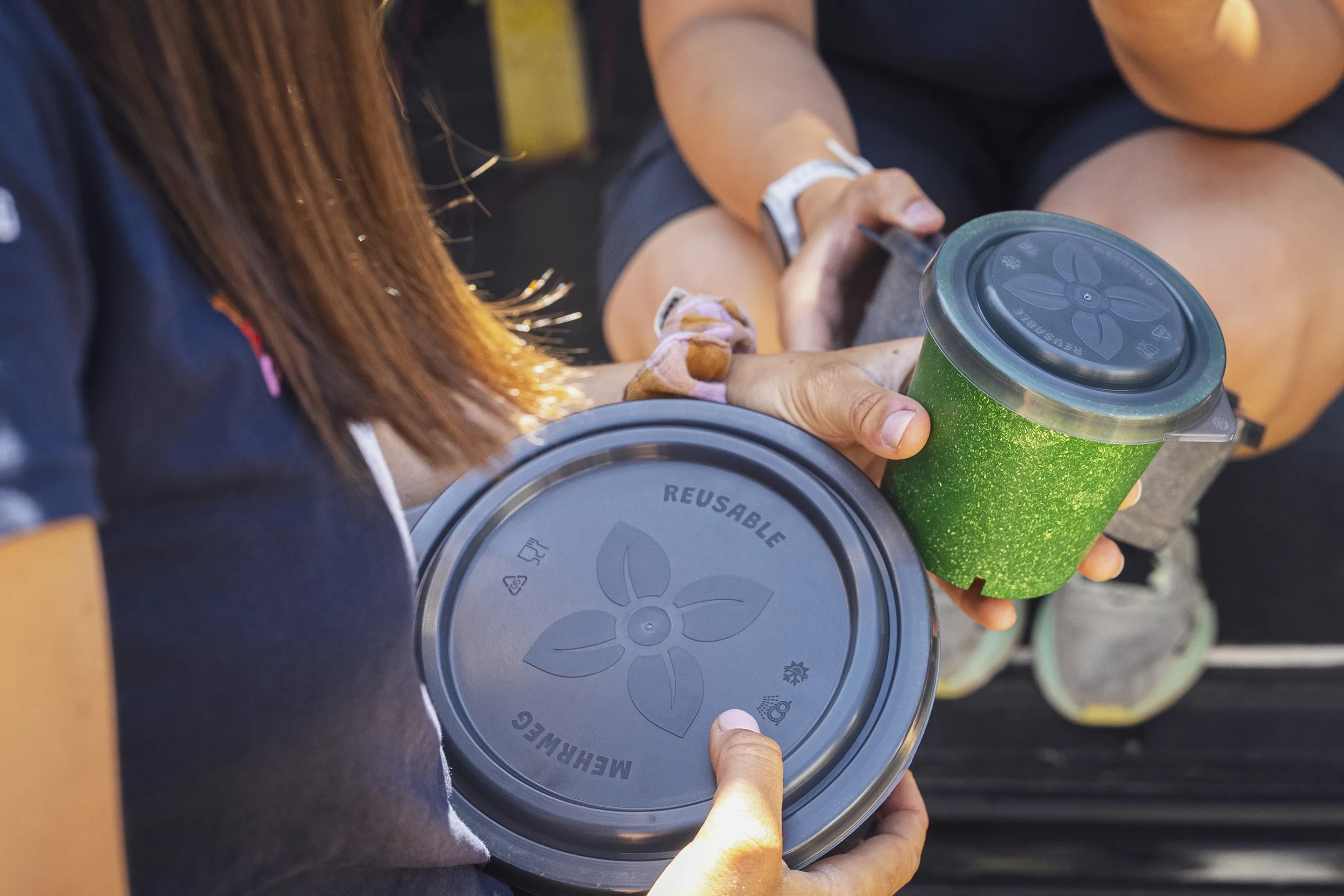
Reusable tableware on the road. When we're travelling or working away from the base, we now bring reusable plates, bowls, cups, and cutlery instead of reaching for disposable alternatives.
Buying in bulk. For team catering and race preparation, we try to buy larger formats whenever we can, which cuts down on the amount of unnecessary packaging.
Sorting and recycling properly. Both at our base and during events, we separate our waste streams as much as local facilities allow, so more of it actually gets recycled instead of ending up in landfill.
Refilling instead of replacing. Wherever we can, from cleaning products to water containers, we refill rather than buy new single-use packaging.
We know these steps are small compared to the scale of the plastic problem the ocean is facing. But we'd rather be a team that does the small things reliably than one that talks about the big things and does nothing. Plastic Free July gives us a good excuse to check in on these habits, tighten up where we're falling short, and keep pushing each other to do better.
I have really enjoyed being a part of a team that values the oceans, marine life, and overall earth we all live on. These small actions can make a big difference as long as people know it takes consistency and determination to make a large change over time.
For more information about how to participate in the movement visit Plastic Free July: https://www.plasticfreejuly.org/
